

Why Mutual Consent Divorce Gets Delayed: Beyond the Six-Month Rule
Nisha had her hopes pinned on a quick mutual consent divorce. She and her husband had already lived apart for nearly a year, spoke to their families, and both agreed to separate. Still, their case dragged on for another nine months. The six-month cooling off period came and went, but each court date brought a new reason for delay – sometimes a missing document, sometimes her husband’s lawyer was stuck in another courtroom. She started to wonder if mutual consent divorce is ever as simple as it looks on paper.
The truth is, even with mutual agreement, divorce delay is common in India – often stretching well beyond the six-month cooling off period. Court backlog, non-cooperation, and procedural hurdles slow things down, leaving couples frustrated and stuck in limbo.
Why Mutual Consent Divorce Takes Longer Than Expected in India
How Mutual Consent Divorce Is Supposed to Work
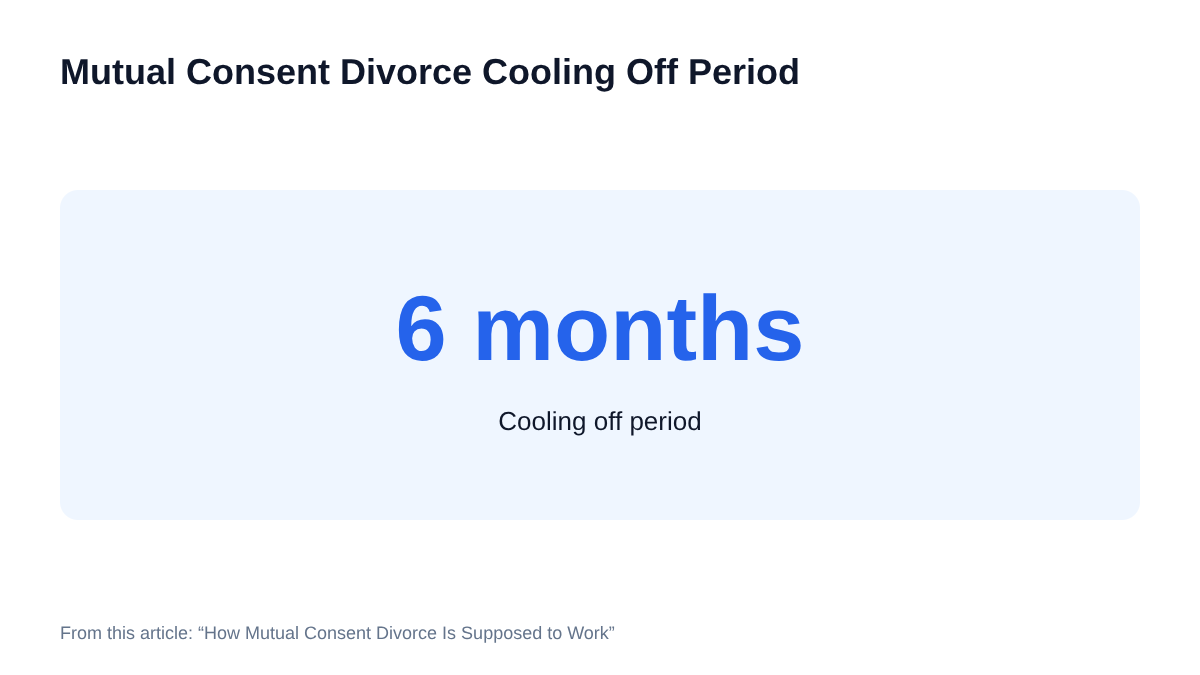
A mutual consent divorce is meant to be straightforward. Both spouses file a joint petition under Section 13B of the Hindu Marriage Act (or relevant law for their religion), stating they’ve been living apart for at least a year and want to end the marriage. The law requires a six-month cooling off period after filing, giving couples time to reconsider or reconcile. After that, if both parties still agree, the court can grant the divorce.
But real life is messier. Even with both sides on board, the process often runs into roadblocks. The law aims for efficiency, but other factors get in the way – court schedules, paperwork, human emotions, and sometimes plain old bureaucracy.
Key steps in a mutual consent divorce:
- File a joint petition in the family court.
- Appear for the first hearing; court records statements.
- Serve the six-month cooling off period (can be waived in some cases).
- Appear for the second motion; both parties confirm their consent.
- Court reviews evidence and grants the decree.
Ideally, this would take 6 – 8 months. In reality, divorce delay is common.
The Six-Month Cooling Off Period: Rule or Obstacle?
The six-month cooling off period was designed as a buffer – a chance for couples to rethink. But for many, it feels like an unnecessary pause, especially if separation has lasted much longer.

Can the cooling off period be waived?
Yes, the Supreme Court (in 2017, Amardeep Singh v. Harveen Kaur) said courts can waive the six months if:
- Separation has already lasted at least 18 months.
- Efforts at mediation or reconciliation failed.
- There are no outstanding issues (like property, custody, maintenance).
- Both parties request the waiver.
But getting a waiver isn’t automatic. Some judges are strict, others flexible. Sometimes lawyers themselves forget or avoid requesting it, leading to unnecessary delay.
Why Does the Six-Month Period Still Cause Delay?
- Judges may insist on strict compliance, even if a waiver is possible.
- Couples or lawyers may not know the waiver process.
- Courts may not hear waiver requests promptly due to backlog.
- If any paperwork is missing, the clock resets.
On paper, the six months is a minimum, not a maximum. But it often becomes a bottleneck.
Court Backlog and Systemic Delays
Even if both parties do everything right, the Indian legal system is slow. According to the National Judicial Data Grid, lakhs of family law cases are pending nationwide, with major cities like Delhi, Mumbai, and Bangalore facing especially heavy loads.
Common Court-Related Reasons for Divorce Delay
- Hearing dates months apart: Courts are overbooked, so even routine hearings get scheduled far apart.
- Adjournments: If one lawyer is absent, or a judge is unavailable, the hearing gets postponed.
- Transfer of judges: When a judge is transferred, cases are reassigned and often delayed.
- Shortage of staff: Clerks, typists, or bench clerks on leave can stall proceedings.
Even a simple adjournment can push the next date three to six months ahead. Sometimes the court’s own diary is the main culprit.
How Different Cities Compare
- Delhi: High pendency, but some family courts are efficient if both lawyers push.
- Mumbai: Heavy backlog, especially in Bandra Family Court; cases often take over a year.
- Chennai/Bangalore: Mixed pace, but adjournments are common.
Honestly, unless you or your lawyer actively chase the court, your case can get lost in the pile.
Non-Cooperation and Withdrawal of Consent
A mutual consent divorce needs both parties to show up, sign, and confirm consent – twice. If one person changes their mind, or even just drags their feet, things can grind to a halt.
How Non-Cooperation Causes Divorce Delay
- One spouse stops attending hearings or avoids court.
- Delay in signing the second motion affidavit.
- Disagreements crop up about alimony, custody, or property during the cooling off period.
- Withdrawal of consent, even on the last hearing date.
What Happens If Consent Is Withdrawn?
If either party withdraws consent before the final decree, the court can’t grant a mutual consent divorce. The process then shifts to a contested divorce, which is much longer and more stressful.
Sometimes, withdrawal is used as a bargaining chip – one spouse tries to renegotiate terms, or just delays out of spite. It’s not rare.
How to Minimise Non-Cooperation
- Document all agreements (alimony, custody, property) in writing before filing.
- Use mediation to iron out sticking points.
- Keep communication open; surprises cause delays.
Legal Hurdles: Missing Paperwork, Technicalities, and Surprises
Even small technical errors can derail a mutual consent divorce. Courts are strict about process and documentation.
Typical Legal Hurdles Causing Divorce Delay
- Missing or incorrect documents (address proof, marriage certificate, photographs).
- Incorrect jurisdiction (filing in the wrong court).
- Incomplete affidavits or unsigned statements.
- Mistakes in the petition (wrong dates, names, or details).
- Non-payment of court fees.
Each error can force a resubmission, new affidavit, or even a fresh petition. This adds weeks or months.
How to Avoid Legal Pitfalls
- Double-check all documents and affidavits.
- Ask your lawyer for a checklist before filing.
- Attend all hearings personally, not just through your lawyer.
- Follow up regularly with your advocate.
Mediation, Reconciliation, and Their Role in Delays
Indian family courts often refer couples to mediation or reconciliation centers, even in mutual consent matters. The intention is good, but it sometimes creates extra steps.
How Mediation Can Slow Down (or Speed Up) the Process
- Courts may refer every mutual consent case to mediation by default.
- Mediation sessions can take weeks to schedule and conclude.
- If mediation fails, the court resumes the original process, sometimes after a gap.
- If mediation succeeds (couple reconciles), the divorce is withdrawn.
While mediation is helpful for some, for couples who are certain about divorce, it can feel like a hurdle. Still, skipping it is not always possible – courts want to ensure both parties are making an informed decision.
Adjournments: The Silent Culprit
Adjournments are postponements requested by lawyers or ordered by the court. They might seem harmless, but they add up quickly.
Why Do Adjournments Happen?
- Lawyer is busy in another court or on leave.
- One party is absent due to illness, travel, or work.
- Documents are missing or not ready.
- Judge is unavailable or overbooked.
Each adjournment means the next date is set weeks or months later. Some lawyers use adjournments to stall, especially if negotiations are ongoing outside court.
How to Reduce Adjournments
- Choose a lawyer who prioritises your case.
- Make sure both parties attend every hearing.
- Prepare all documents in advance.
- Politely push for shorter intervals between dates.
Special Cases: NRIs, Interfaith, and Cross-Jurisdictional Issues
Divorce delay is even more common in special scenarios. If one spouse lives abroad, or the marriage crosses religious or jurisdictional lines, extra steps are needed.
Common Special Situations
- NRI couples: One spouse must travel to India or appoint a power of attorney. Video hearings are possible in some courts but not all.
- Interfaith marriages: Different legal provisions apply (Special Marriage Act vs. personal laws), sometimes causing confusion.
- Jurisdictional disputes: Arguments over which city or state has authority to hear the case.
Each of these can add months to the process, especially if documents from abroad need embassy attestation or translation.
Money Matters: Alimony, Maintenance, and Property Disputes
Even with mutual consent, money topics can get sticky. If alimony, child support, or property division isn’t agreed before filing, the process stalls.
How Financial Issues Cause Divorce Delay
- Disputes over the amount or timing of alimony.
- Unclear agreements about child custody costs or asset division.
- Last-minute changes in financial terms.
Courts will not grant a mutual consent divorce unless both parties record clear, unambiguous terms. If new disputes arise, the process is paused until resolved.
Best Practices to Avoid Financial Delays
- Settle all money matters in writing before filing.
- Attach settlement agreements to the petition.
- Be honest about assets and liabilities – hidden details come out and cause trouble.
Practical Tips to Minimise Divorce Delay
Getting a mutual consent divorce quickly is possible, but it takes planning and follow-through.
- Choose an experienced family lawyer who knows your local court’s process.
- Prepare all documents and affidavits before filing.
- Attend all hearings in person if possible.
- Request a waiver of the six-month cooling off period if eligible.
- Keep communication open with your spouse to avoid last-minute surprises.
- Avoid unnecessary adjournments – push for shorter intervals between dates.
- Document all agreements (alimony, custody, property) and submit them with the petition.
- Follow up regularly with your advocate and the court registry.
Frequently Asked Questions
What is a mutual consent divorce?
A mutual consent divorce is a legal process where both spouses jointly file for divorce, agreeing on separation and all related terms such as alimony, custody, and property. It is available under Section 13B of the Hindu Marriage Act and similar laws for other religions.
How long does a mutual consent divorce usually take in India?
A mutual consent divorce typically takes six to eight months if both parties cooperate and all documents are in order. However, delays due to court backlog, adjournments, or non-cooperation are common, sometimes stretching the process to over a year.
Can the six-month cooling off period be waived?
Yes, the Supreme Court allows courts to waive the six-month cooling off period if the couple has already lived apart for at least 18 months and all issues are settled. Both parties must request the waiver, and the court must be convinced reconciliation is not possible.
What documents are needed for mutual consent divorce?
You will need:
– Marriage certificate
– Address proof for both parties
– Passport-sized photographs
– Joint petition for divorce
– Settlement agreement for alimony, custody, and property (if applicable)
– Proof of separation
– Income details (if maintenance is involved)
What happens if one spouse withdraws consent before final hearing?
If either party withdraws consent before the final decree, the mutual consent divorce cannot proceed. The only option then is to file a contested divorce, which is a much longer and more complex process.
How do court backlogs affect divorce delay?
Court backlogs mean that hearing dates are often set months apart. Even routine matters can be delayed due to crowded dockets, staff shortages, or unavailable judges. This is a major reason why mutual consent divorces take longer than expected.
What is an adjournment in divorce cases?
An adjournment is a postponement of the hearing date, often due to absence of a party, lawyer, judge, or incomplete paperwork. Each adjournment pushes the process back by weeks or months, adding to the overall delay.
Is mediation mandatory in mutual consent divorce?
Many family courts refer mutual consent divorce cases to mediation as a standard step. While it can help resolve disputes, it can also add weeks to the process. Mediation is usually not required if all terms are settled and both parties insist on divorce.
What are common reasons for delay beyond the six-month period?
Common causes include:
– Court backlog and slow scheduling
– Adjournments requested by lawyers or parties
– Missing or incorrect documents
– Non-cooperation or withdrawal of consent
– Unsettled financial or custody terms
How can NRIs get a mutual consent divorce in India?
NRIs can file for mutual consent divorce in India, but one spouse must attend court or appoint a power of attorney. Some courts allow video hearings, but embassy-attested documents are often required, which can add time.
Is mutual consent divorce faster than contested divorce?
Yes, mutual consent divorce is much faster and less stressful than contested divorce, provided both parties cooperate and settle all terms in advance. Contested divorce can take several years.
Can mutual consent divorce be filed online?
Some states and courts offer e-filing for mutual consent divorce petitions. However, physical court appearances are still required for statements and final hearing. Online filing may speed up document submission, but not the entire process.
What if alimony or custody is not settled before filing?
If alimony, custody, or property terms are not fully settled, the court will not grant a mutual consent divorce. Unresolved issues must be documented and agreed upon before the final decree.
Does the six-month period apply to all religions?
The six-month cooling off period is specific to the Hindu Marriage Act but similar waiting periods exist under other personal laws and the Special Marriage Act. Courts may apply waivers in all cases if justified.
Can I change my lawyer during a mutual consent divorce?
Yes, you can change your lawyer at any stage by filing a vakalatnama with the new advocate. However, frequent changes may cause further delays, so it’s best to choose carefully from the start.
Key Takeaways
- Mutual consent divorce is designed to be quick but often faces delays in India.
- The six-month cooling off period can be waived but is not always done.
- Court backlog and adjournments are major reasons for slow progress.
- Non-cooperation or withdrawal of consent by one spouse can halt the process.
- Proper documentation and clear agreements prevent many legal hurdles.
- Mediation is helpful for disputes but can add time for settled cases.
- NRIs and cross-jurisdictional cases face extra paperwork and delays.
- Financial settlements must be agreed before filing for speed.
- Adjournments, although common, can be minimised with preparation.
- Choose an experienced family lawyer and follow up regularly for best results.
Mutual consent divorce in India sounds simple on paper but rarely runs like clockwork. Court backlog, paperwork errors, and human unpredictability combine to stretch timelines. If you’re hoping for a quick end, be proactive – prepare every document, push for waiver where possible, and attend every hearing yourself. Even then, patience is sometimes the only remedy for a system that moves at its own pace.
