

Why Parenting Plans Fail in Mutual Divorce Cases (And What Actually Works)
Sonal and Arjun had the right intentions. They both wanted their daughter to be happy after the divorce. They sat with their lawyers and drafted a neat parenting plan – weekdays with Sonal, weekends with Arjun, holidays split equally, video calls every night. But within three months, the plan was in pieces. School timings clashed, Arjun’s work travel came up, Sonal’s parents fell ill, and their WhatsApp chats turned sour. Their daughter started refusing to pack her bag for Arjun’s visits. Sound familiar? Parenting plan challenges like these are far too common in mutual divorce cases, leaving everyone – especially the kids – exhausted and confused.
Parenting plans are supposed to make life smoother for separated families. But on the ground, most plans run into enforcement issues, real-world custody problems, and endless communication breakdowns. If you’re stuck in this mess or about to enter it, you’re not alone. The good news: with the right approach, you can avoid most of these traps.
Most parenting plans in mutual divorce cases fail because they’re too rigid, ignore practical realities, and break down when parents stop communicating. Plans that actually work are flexible, focus on the child’s adjustment, and have built-in ways to resolve conflict.
Why Most Parenting Plans Collapse After Mutual Divorce
Most parents sign their parenting plan with hope. But the gap between a signed agreement and daily life can be huge. Here’s why these plans often break down.
Parenting plan challenges usually begin with good intentions but quickly hit roadblocks. These challenges include unrealistic schedules, lack of enforcement, and constant changes in family needs. For example, a plan might specify alternate weekends, but what if a parent’s job suddenly changes? Or the child’s school has extra classes?
Unrealistic Schedules and Over-Planning
Often, plans are too detailed. They try to map out every festival, exam, and vacation for years ahead. But life isn’t a timetable. Kids fall sick, parents get transferred, relatives visit from out of town. A rigid plan doesn’t leave room for the unexpected.
- School events or sudden exams can disrupt the agreed handover schedule.
- One parent’s work travel may not have been considered.
- Grandparents’ involvement can change overnight, especially if health issues arise.
Lack of Enforcement Mechanisms
Even if both parents agree on paper, there’s often no clear way to enforce the plan. If one parent refuses to cooperate, the other is left helpless unless they want to go back to court.
- Indian courts are slow to intervene in minor disputes.
- Police won’t get involved in routine parenting disagreements.
- Children themselves may refuse to follow the plan as they get older.
Communication Breakdown
This is the silent killer of most parenting plans. WhatsApp messages get ignored, calls turn into arguments, and soon parents are only communicating through lawyers or relatives. When parents stop talking, even the best plan crumbles.
- Mistrust builds up over small misunderstandings.
- One missed pickup can lead to weeks of bitterness.
- Children feel the tension and may start siding with one parent.
Child Adjustment Issues
Children don’t always adjust the way parents hope. They may resist moving between homes, struggle with schoolwork, or develop anxiety. If the plan doesn’t allow for flexibility based on the child’s needs, everyone suffers.
- Sudden changes in school routine can cause distress.
- Teenagers may refuse to follow the agreed visitation.
- Younger children can become clingy or withdrawn.
What Actually Works: Building Parenting Plans That Survive Real Life
A parenting plan that works is not a rigid contract. It’s a living document that can adapt to new situations. Here’s what separates successful plans from the rest.
A flexible agreement, focused on the child’s real needs and supported by open lines of communication, is far more likely to succeed.
Start With the Child’s Daily Reality
Instead of planning for every holiday, start by mapping out the child’s average week. Where do they go to school? Who drops them? When do they have tuition, sports, or music class?
- Write down the child’s actual weekly schedule.
- Identify points of stress – long travel, tight transitions, or late-night handovers.
- Agree on a base routine that minimizes disruption for the child.
Build in Flexibility
No plan survives unchanged. Good parenting plans include mechanisms for change.
- Allow for swaps and changes with reasonable notice (for example, 48 hours).
- Set up a monthly check-in call to discuss what’s working and what’s not.
- Include a clause on how to handle emergencies – who covers if one parent is suddenly unavailable?
Use Simple, Clear Language
Legal jargon creates confusion. Write the plan in plain language. Make sure both parents understand every line.
- Avoid vague phrases like “reasonable visitation.”
- Spell out times, locations, and backup contacts.
- If the child is old enough, involve them in the discussion.
Conflict Resolution Clauses
Every plan should include a way to resolve disputes without running to court.
- Agree on a neutral third-party mediator, like a family friend or counselor.
- Set a timeline for resolving issues (e.g., within 7 days of a dispute).
- Put in writing what happens if the plan is ignored repeatedly.
Practical Example Table: Flexible vs. Rigid Parenting Plan
| Feature | Rigid Plan | Flexible Plan |
|---|---|---|
| Schedule | Fixed days, no changes allowed | Swaps allowed with notice |
| Enforcement | Court only | Mediation first |
| Child’s Input | Not considered | Child’s wishes discussed |
| Communication | Only in emergencies | Regular check-ins |
| Holidays | Set years in advance | Decided each year |
Enforcement Issues: Why Parenting Plans Are Hard to Implement
Many parents ask, “What if my ex just ignores the plan?” Enforcement issues are the number one reason parenting plans fall apart after mutual divorce.
In India, courts rarely step in for minor parenting plan violations, so practical enforcement relies on cooperation and social pressure, not legal threats.
Legal Enforcement in India
- Indian courts expect parents to work things out themselves unless there’s abuse or major neglect.
- Police rarely intervene in day-to-day custody fights.
- Getting a contempt order is slow and expensive.
Social and Emotional Enforcement
- Extended family often acts as a moral check. If one parent is seen as unfair, relatives may intervene.
- Children themselves may refuse to visit a parent who doesn’t respect the plan or makes them uncomfortable.
Practical Steps if the Plan Is Ignored
- Try a direct conversation (in person or by phone, not just WhatsApp).
- Involve a neutral third party, like a family friend or counselor.
- If problems continue, document each incident and seek mediation.
- Only as a last resort, approach the court for enforcement.
Common Enforcement Mistakes
- Threatening court action too soon, which destroys trust.
- Ignoring small violations, which can become bigger over time.
- Using the child as a messenger or bargaining chip.
Real-World Custody Problems No One Talks About
There’s plenty of theory about parenting plans, but daily life throws up messy situations. Here are some real-world custody problems most plans don’t address.
Custody complications often come from school schedules, illness, travel, and new family dynamics. Plans that ignore these are set up to fail.
School and Tuition Schedules
- Changing school timings for exams or events can disrupt handovers.
- Tuition classes may overlap with visitation slots.
- School holidays often don’t match both parents’ work leave.
Health and Medical Emergencies
- Child falls ill during a parent’s custody. Who pays for treatment? Who decides the doctor?
- Sudden hospitalizations of grandparents or siblings can throw the plan off.
Family Functions and Festivals
- Weddings, funerals, or religious events often require last-minute changes.
- Extended family may pressure for more or less access during festivals.
Travel and Relocation
- One parent needs to relocate for work. Does the plan allow for long-distance custody?
- International travel with the child – who gives permission, and how is it documented?
Parent’s New Relationships
- Step-parents or new partners can create tension.
- Children may resist visits if they feel uncomfortable with a parent’s new family.
Communication Breakdown: The Silent Threat to Parenting Plans
Most parenting plans fall apart not because of big legal fights, but because parents stop talking. Communication breakdown is the silent threat nobody warns you about.
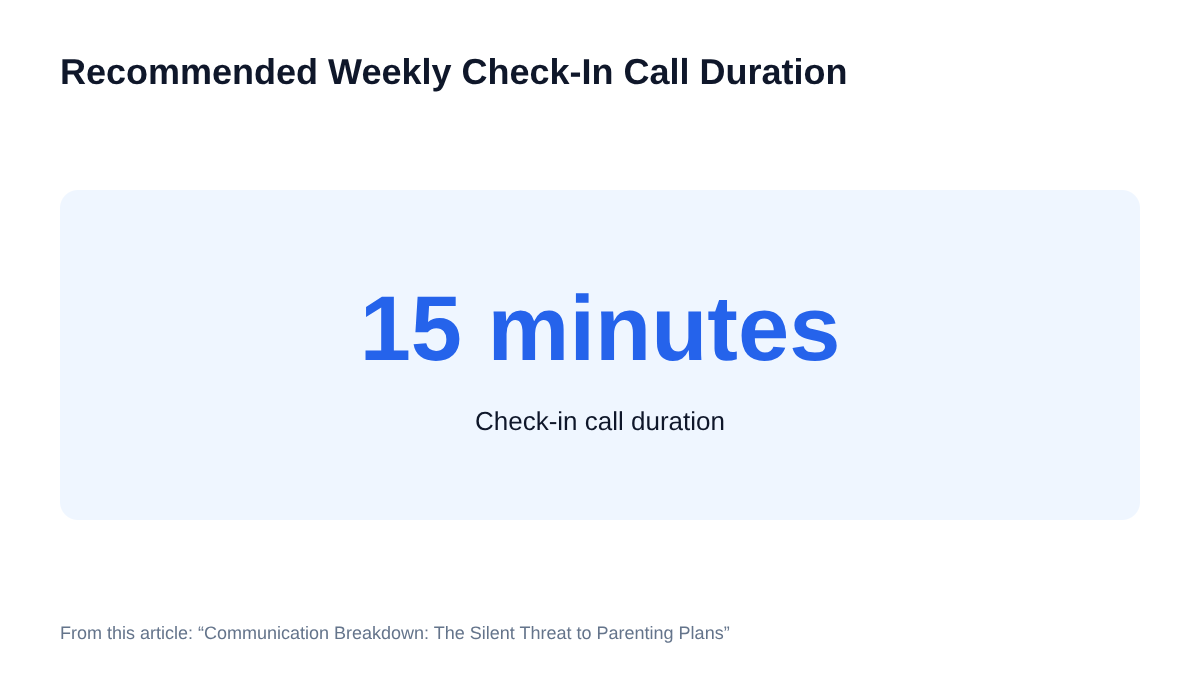
When parents only communicate through lawyers or avoid each other completely, even the best parenting plan will eventually fail.
How Communication Breaks Down
- Conversations turn into arguments about old grievances.
- Parents start using children as messengers.
- Small misunderstandings grow into major disputes.
Signs Your Communication Is Breaking Down
- You avoid calling your co-parent and rely only on text.
- Information about the child’s health or school is not shared promptly.
- Changes in plans are announced last minute, causing stress.
Fixing Communication
- Set regular, short check-in calls (15 minutes a week can help).
- Use shared calendars (Google Calendar or a simple diary) for schedules.
- Agree on one communication channel for urgent matters, such as phone calls only for emergencies.
When to Involve a Mediator
If you can’t talk without fighting, bring in a neutral third party. This could be a family elder, counselor, or even a trusted friend. Sometimes, just knowing someone else is listening keeps things civil.
Child Adjustment: What Kids Need vs. What Parents Plan
Parents often focus on fairness between themselves. But children see things differently. Their needs change with age and situation.
The best parenting plans are those that put the child’s comfort, stability, and emotional health above strict fairness or legal precision.
Age-Specific Needs
- Young children need shorter, more frequent contact to maintain bonds with both parents.
- School-age kids may want stability – same home on school nights, familiar routines.
- Teenagers crave autonomy and often want to choose their own schedule.
Emotional Adjustment
- Children may grieve the loss of a regular family unit.
- They might feel guilty about enjoying time with one parent.
- Sudden changes or forced transitions can trigger anxiety or anger.
Practical Ways to Support Child Adjustment
- Keep routines as stable as possible.
- Allow the child some input into the schedule, especially as they grow older.
- Watch for warning signs: drop in school performance, withdrawal, or sudden anger.
When Professional Help Is Needed
If the child shows signs of depression, anxiety, or behavioral issues lasting more than a few weeks, consider involving a counselor or child psychologist. Honest, I’d skip the waiting if you see real distress – kids recover faster with support.
Flexible Agreements: How to Build Parenting Plans That Adapt
A flexible agreement isn’t just a loose plan. It’s a smart plan that expects change and builds in ways to handle it.
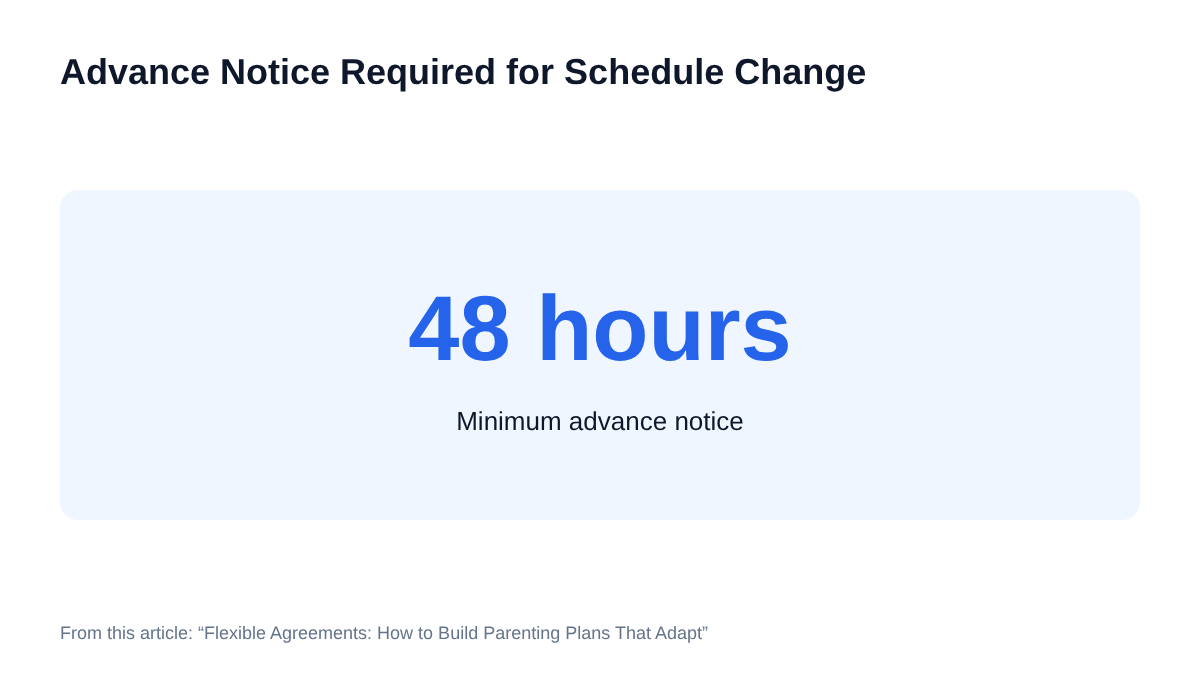
Flexible parenting plans are more successful because they allow for swaps, emergencies, and changes in the child’s needs without turning every issue into a fight.
Core Features of Flexible Agreements
- Clear base schedule, but swaps allowed with notice.
- Written process for requesting changes.
- Regular review (quarterly or half-yearly) to adjust for new needs.
- Contingency plans for travel, illness, or unexpected events.
Steps to Create a Flexible Parenting Plan
- Map out the child’s real weekly routine.
- Agree on a base schedule that works for both parents.
- Decide how changes will be requested and approved.
- Set a regular check-in to review what’s working.
- Include a dispute resolution process (mediation, family elder, etc.).
Example of a Flexible Plan Clause
“If either parent requires a change in the agreed schedule due to work, illness, or travel, they will inform the other parent at least 48 hours in advance. Both parents will make reasonable efforts to accommodate such requests, keeping the child’s best interests in mind.”
Reviewing and Updating the Plan
Life changes. Plans need to change too. Set a reminder to review the agreement every six months and update as needed. This avoids small issues becoming big fights.
For more detailed strategies on building child custody agreements in India, see Child Custody Agreements in Mutual Divorce: Strategic Choices for Parents in India.
Conflict Resolution: Handling Disputes Without Ruining Co-Parenting
Even the best plan will hit rough patches. How you handle conflict decides whether your agreement survives.
A clear, fair process for resolving disputes helps parents avoid court battles and keeps the focus on the child, not old grudges.
Types of Disputes That Arise
- Missed pickups or drop-offs
- Disagreements about holidays or travel
- Changes in the child’s schedule (school, tuition, etc.)
- Disputes over medical or schooling decisions
Common Conflict Resolution Methods
- Direct conversation (face-to-face or call)
- Mediation by a neutral third party (counselor, family elder)
- Written communication to avoid misunderstandings
- Involving lawyers only for serious or repeated violations
Tips for Successful Conflict Resolution
- Don’t involve the child in disputes.
- Focus on the issue, not past grievances.
- Keep a written record of agreements and changes.
- Agree in advance on how urgent issues will be handled.
Warning Signs You Need Outside Help
- Arguments become frequent or aggressive.
- The child is visibly stressed by parental disputes.
- One parent consistently ignores the plan.
If you see these signs, it’s time to involve a mediator or professional counselor before things get worse.
Frequently Asked Questions
What are the most common parenting plan challenges in mutual divorce?
The most common parenting plan challenges include unrealistic schedules, lack of enforcement, poor communication, and failure to adapt to the child’s changing needs. These issues often cause plans to break down within months of implementation.
How can we enforce a parenting plan if one parent refuses to follow it?
Enforcement in India is difficult without court intervention. Steps include direct communication, mediation with a neutral third party, documenting violations, and only as a last resort, approaching the court. Social pressure from family may also help.
What should a flexible parenting plan include?
A flexible plan should have a clear base schedule, allow for swaps with advance notice, include a process for requesting changes, set regular review periods, and have a dispute resolution method such as mediation.
How do parenting plan challenges affect children?
Children may experience anxiety, confusion, or behavioral problems if the plan is too rigid, frequently disrupted, or if parents fight. Flexible plans and good communication help children adjust better.
What is the difference between a rigid and a flexible parenting plan?
A rigid plan has fixed schedules and little room for change, while a flexible plan allows swaps, regular reviews, and adapts to the child’s needs. Flexible plans are more successful in real life.
Can we modify a parenting plan after mutual divorce?
Yes, parenting plans can and should be reviewed and modified as the child’s needs or family circumstances change. Schedule a review every six months or after any major life event.
How can we reduce communication breakdowns in co-parenting?
Regular check-in calls, shared calendars, clear written communication, and involving a mediator for disputes can reduce communication breakdowns. Avoid using the child as a messenger.
What process should we follow if we need to change the custody schedule?
- Notify the other parent with reasonable notice (e.g., 48 hours)
- Discuss and agree on the new schedule
- Document the change in writing
- Review the impact on the child
What are signs that our child is not adjusting well to the parenting plan?
Signs include frequent tantrums, withdrawal, drop in school performance, refusal to visit one parent, or physical symptoms like headaches. If these persist, seek professional help.
Is mediation mandatory for parenting plan disputes?
Mediation is not mandatory by law in India but is highly recommended before approaching the court. Most courts encourage parents to resolve disputes through mediation first.
How do school schedules affect parenting plans?
School timings, tuition, and exams often clash with visitation schedules. Plans must be reviewed regularly to accommodate these changes and reduce stress on the child.
What if a parent relocates after the parenting plan is signed?
Relocation requires revisiting the agreement. Parents should discuss new arrangements for visitation, long-distance travel, and communication to ensure the child maintains contact with both parents.
Who decides medical or schooling issues in a mutual divorce parenting plan?
Ideally, both parents should share decision-making for major issues. The plan should specify how disagreements will be handled, such as through mediation or consulting a neutral expert.
How often should parenting plans be reviewed?
Parenting plans should be reviewed at least every six months or whenever there is a significant change in the child’s life, such as a new school or a parent’s relocation.
Can children have input in the parenting plan?
Yes, especially older children and teenagers. Involving them in discussions can help with adjustment and reduce resistance to the agreed schedule.
Key Takeaways
- Most parenting plan challenges stem from rigid schedules, poor communication, and lack of practical enforcement.
- Successful plans focus on the child’s real daily needs, not just fairness between parents.
- Flexible agreements allow for swaps, emergencies, and life changes without constant conflict.
- Enforcement in India relies more on cooperation and social pressure than on legal threats.
- Regular check-ins and open communication prevent most breakdowns.
- Mediation is often more effective than court battles for resolving disputes.
- Children’s adjustment should be the top priority in any parenting plan.
- Both parents must be willing to adapt and review the plan as life changes.
- Avoid using the child as a messenger or bargaining chip.
- Written records of changes and agreements reduce future disputes.
- School, health, and travel issues need special clauses in the plan.
- New relationships and family events can disrupt even the best plans if not handled thoughtfully.
- Professional help may be needed if children show signs of distress.
- Review and update the plan every six months or after major life events.
- Simple, clear language in agreements prevents confusion and fights.
Most families expect a parenting plan to solve everything. The reality is, plans are just a starting point. What actually works is the willingness to adapt, talk things out, and put the child’s comfort above all else. The hardest part isn’t making the plan – it’s living it. If you keep communication open and stay flexible, you’ll get through the rough patches. Parenting together after divorce is never perfect, but it can work if both sides remember what matters most: the child’s peace and happiness.
