

Do-It-Yourself Mutual Consent Divorce: Where Self-Filers Slip Up Most
A couple in India, both working professionals, decide to separate after years of trying to make their marriage work. They agree on all major points – property, child custody, alimony – and opt for a mutual consent divorce. Hoping to save time and money, they attempt a DIY divorce, preferring self-filing over hiring a lawyer. Yet, months later, their petition is rejected by the court due to avoidable paperwork mistakes. This is a common story – DIY divorce appeals to many, but the process is less forgiving than it first appears.
Mutual consent divorce under Indian law is designed to be straightforward, but even small missteps can derail cases, prolonging an already stressful period. The prospect of self-filing is attractive, especially for those who want privacy, speed, and cost savings. However, self-filers regularly encounter pitfalls that delay or deny their divorce, from document errors to overlooked legal requirements. Understanding where most people slip up can mean the difference between a smooth process and a prolonged ordeal.
DIY divorce in India enables couples to self-file for mutual consent divorce without legal representation, but common mistakes in documents, procedures, and court appearances often lead to delays or rejections. Navigating the process carefully and understanding legal requirements are essential to avoid setbacks.
Where DIY Mutual Consent Divorce Goes Wrong: Common Pitfalls for Self-Filers
Key takeaways
– DIY divorce for mutual consent is legally permitted but error-prone without deep familiarity with court procedure.
– Document mistakes, missing affidavits, and unclear settlement terms are the leading causes of petition rejection.
– Courts require strict compliance with Section 13B of the Hindu Marriage Act, 1955, and other formalities.
– Failing to appear for hearings or misunderstanding cooling-off rules can delay or derail the process.
– Legal advice is not mandatory, but professional review of your petition reduces the risk of costly errors.
– Each High Court may have unique documentation or process requirements.
– Self-filers often underestimate the emotional and procedural challenges of direct court appearances.
– Costs can be lower for DIY divorce, but repeated filing fees and adjournments can erase savings.
– Digital filing is available in some courts, but in-person steps and original signatures remain critical.
– Consulting recent case law or a local practitioner is wise before final submission.
What Is DIY Divorce in the Indian Mutual Consent Context?
Do-it-yourself (DIY) divorce in India refers to self-filing a mutual consent divorce petition without engaging a lawyer to prepare documents or represent either party in court. This option is legally permitted for couples who agree on all terms, including alimony, child custody, and property division. The process requires both spouses to jointly draft, sign, and submit their petition under Section 13B of the Hindu Marriage Act, 1955, or the relevant personal law.
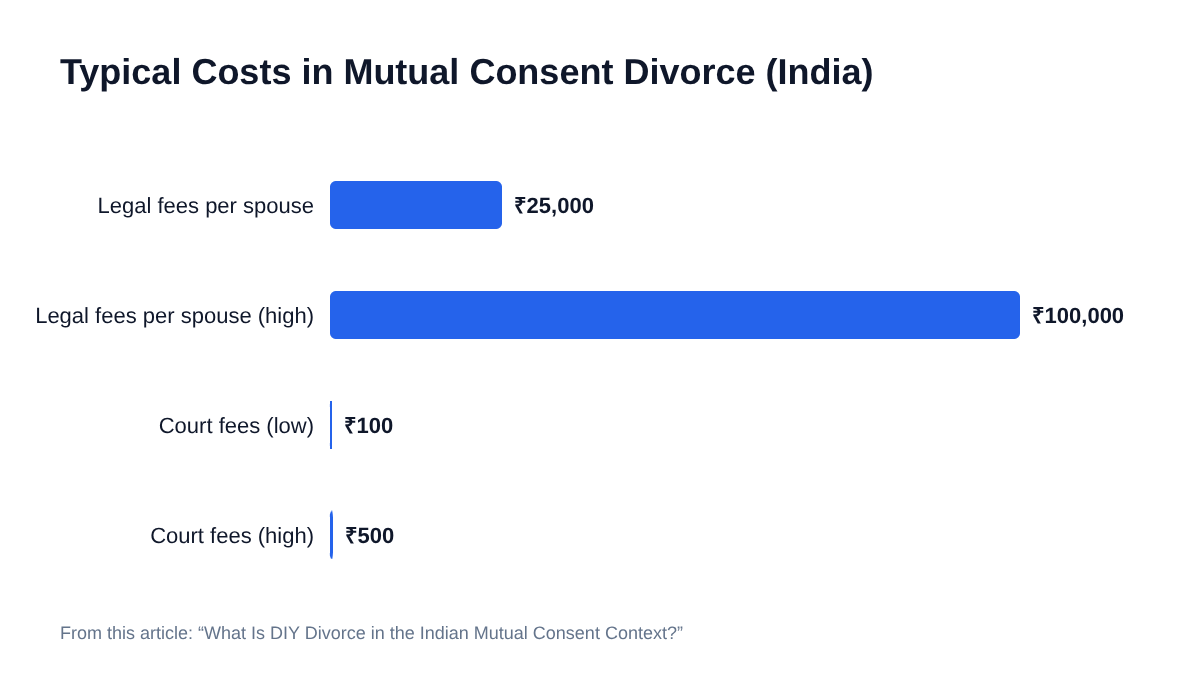
The main attraction is cost savings. Legal fees for mutual consent divorce in Indian metros typically range from ₹25,000 to ₹1,00,000 per spouse, depending on complexity and location. By self-filing, couples hope to reduce expenses to court fees (usually ₹100 – ₹500) and incidental costs. However, the court’s scrutiny is strict. Judges routinely reject or adjourn petitions if documents are incomplete, signatures are missing, or the settlement terms are unclear or ambiguous. In many courts, especially in Delhi, Mumbai, and Bengaluru, self-filers are a small minority, and court staff may not provide procedural guidance beyond basic document checklists.
DIY divorce is best suited for couples with no disputes, no minor children (or clear custody arrangements), and simple asset structures. Those with complex finances or cross-jurisdictional issues may find the process overwhelming. For an in-depth look at the legal roadmap, see Mutual Consent Divorce in India: Legal Roadmap, Pitfalls, and Courtroom Realities.
What Are the Legal Steps for DIY Mutual Consent Divorce?
The mutual consent divorce process in India is governed primarily by Section 13B of the Hindu Marriage Act, 1955, with similar provisions in other personal laws. Self-filers must strictly follow each step, as courts expect full compliance regardless of legal representation. Missing a single affidavit or failing to appear on the scheduled date can set the process back by months.
Sequential Steps in DIY Mutual Consent Divorce
The procedure for self-filing a mutual consent divorce is as follows:
- Draft the joint petition: Both parties must jointly sign a petition stating the grounds for divorce and confirming that they have lived separately for at least one year, as required by law.
- Attach supporting documents: These include marriage certificate, address proof, photographs, settlement agreement, and affidavits regarding separation and consent.
- File the petition in the appropriate family court: Jurisdiction is usually determined by the place of marriage, last cohabitation, or current residence.
- First motion hearing: Both parties must appear in person to confirm their consent and the settlement terms before the judge.
- Cooling-off period: The court imposes a minimum six-month waiting period (which may be waived in certain circumstances following Amardeep Singh v. Harveen Kaur, Supreme Court, 2017).
- Second motion hearing: After the cooling-off period (or its waiver), both parties must appear again to confirm their intention to divorce.
- Grant of divorce decree: If the court is satisfied, it issues a decree dissolving the marriage.
Missing any of these steps or submitting incomplete documents leads to adjournments or outright rejection. In the last five years, courts have tightened scrutiny to prevent misuse of the mutual consent route for hurried or fraudulent divorces (see Section 13B, Hindu Marriage Act, 1955).
Where Do Self-Filers Most Often Make Mistakes?
Self-filers frequently underestimate the technical requirements of the process. The most common mistakes are procedural and documentary, not substantive. Even well-educated applicants find themselves repeating hearings or refiling petitions due to avoidable errors.
Typical Document Errors in DIY Divorce
Errors in documentation account for the majority of rejections and adjournments in mutual consent divorce cases. The following mistakes are particularly common:
- Missing or incorrect affidavits: Courts require detailed affidavits from both parties confirming separation, consent, and settlement terms. Using informal language or omitting required declarations almost always leads to rejection.
- Unclear or incomplete settlement agreements: If the petition does not specify how assets, liabilities, alimony, and child custody will be handled, the court may not admit the case.
- Unsigned or improperly signed petitions: Both spouses must sign every page of the petition and affidavits. Digital signatures are not accepted; only original ink signatures suffice in most courts.
- Mismatched details: Discrepancies in names, addresses, or dates between the petition and supporting documents are a routine basis for adjournment.
- Missing or invalid marriage certificate: If the original marriage certificate or a certified copy is not produced, the court may refuse to proceed.
The safest approach is to use the specimen formats available on the relevant High Court website or to have a professional review your draft. See Drafting a Divorce Petition That Survives Scrutiny: Lawyer Insights for detailed drafting guidance.
Procedural Pitfalls in Court Appearances
Even if the paperwork is correct, procedural slip-ups can derail the process:
- Failure to appear for hearings: Both parties must appear in person for both the first and second motion hearings. Absence of either party usually results in adjournment.
- Misunderstanding the cooling-off period: Some self-filers expect the six-month waiting period to be automatically waived. In reality, waiver is discretionary and requires a formal application showing specific grounds, such as irretrievable breakdown or hardship.
- Improper jurisdiction: Filing in the wrong court (for example, based on convenience rather than legal rules) will result in transfer or dismissal.
- Incorrect or missing court fees: Underpayment or non-payment of prescribed fees leads to technical objections.
Courts have little patience for repeated procedural mistakes. Each adjournment means additional time, costs, and emotional strain.
How Does DIY Divorce Compare to Using a Lawyer?
Choosing between DIY divorce and legal representation involves trade-offs in cost, convenience, and risk. While self-filing appeals to those seeking privacy and lower expenses, professional guidance often saves time and reduces the chance of errors.
| Criteria | DIY Divorce (Self-Filing) | With Legal Representation |
|---|---|---|
| Legal fees | ₹100 – ₹500 (court fees only) | ₹25,000 – ₹1,00,000 (per party) |
| Document drafting | By parties, risk of mistakes | By lawyer, higher accuracy |
| Court procedure guidance | Self-managed, limited support | Full guidance by advocate |
| Risk of adjournments | High (due to errors) | Low (if documents are correct) |
| Privacy | High (no third party) | Moderate (lawyer involved) |
| Time to decree | Variable, often longer | Usually shorter |
| Emotional stress | High (direct court handling) | Lower (advocate manages process) |
For couples with straightforward cases, DIY divorce can work, but most people underestimate the demands of the process. A single technical error may require multiple additional hearings. If the couple cannot agree on all terms, or if there are minor children or complex assets, legal representation is strongly advisable. For more on why cases get delayed, see Why Mutual Consent Divorce Gets Delayed: Beyond the Six-Month Rule.
Best Practices for Self-Filers: Minimising Mistakes in DIY Divorce
Self-filers who want to maximise their chances of success should prepare thoroughly. It is not enough to download a sample petition and fill in the blanks. Indian courts expect strict adherence to form, content, and process. The following practices improve success rates for DIY mutual consent divorce:
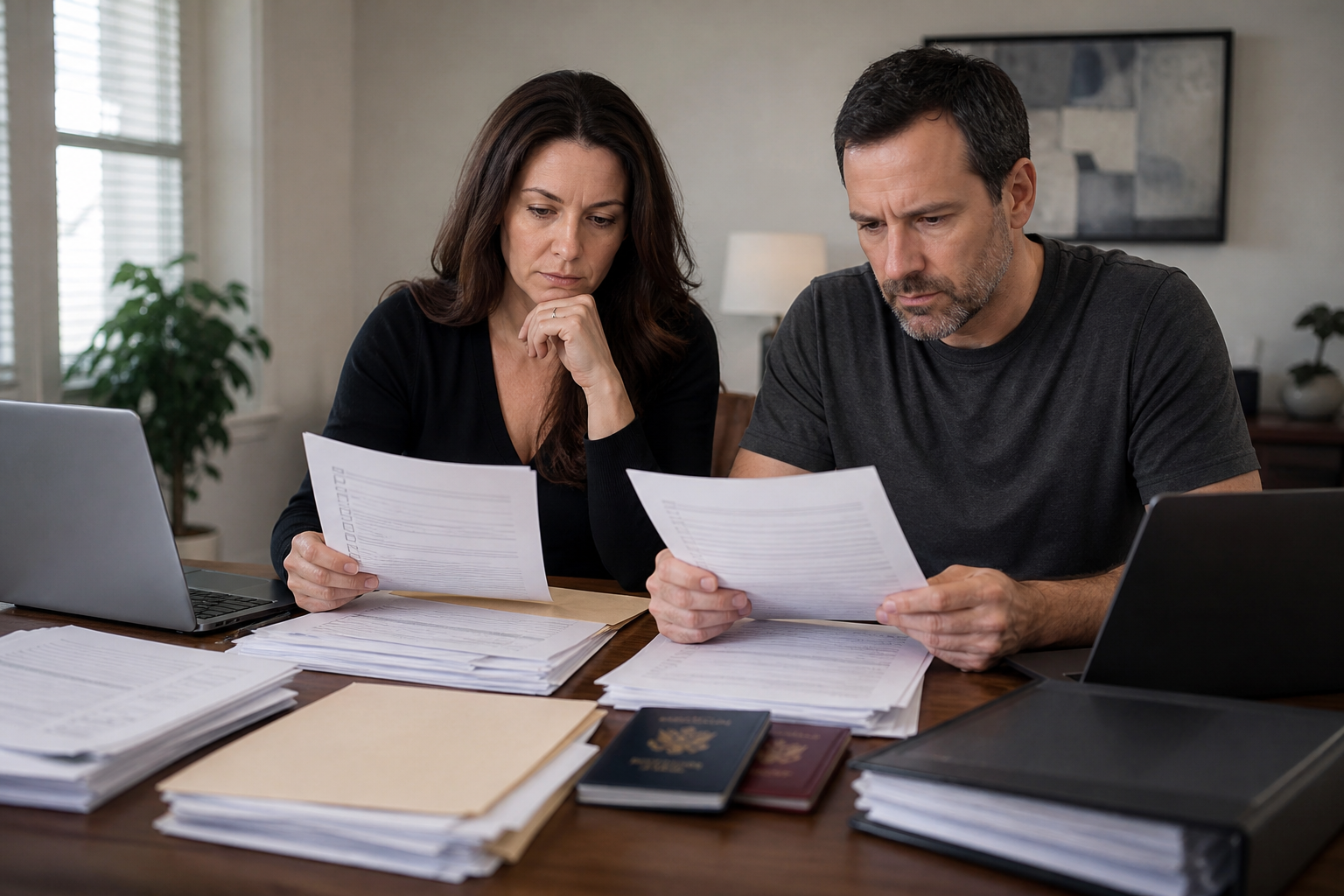
Checklist for Self-Filing Mutual Consent Divorce
- Use official formats: Download specimen petitions and affidavits from the relevant High Court website, not third-party sources.
- Double-check all details: Ensure names, addresses, and dates match across every document. Even a minor mismatch can cause adjournment.
- Specify all settlement terms: Clearly state the division of property, custody arrangements, alimony, and maintenance. Ambiguity leads to objections.
- Prepare for court questions: Judges may ask for clarification on the separation period, consent, or settlement. Practice your answers in advance.
- Plan for both hearings: Both parties must appear at both the first and second motion. If one party is abroad, arrange for a special power of attorney and video conferencing permission in advance.
- Apply for waiver of cooling-off period, if needed: File a separate application, citing grounds recognised by the Supreme Court, and be ready to justify the request.
- Keep originals and copies: Courts often require original documents for inspection. Carry at least two sets of copies for court records and your own use.
Following this checklist reduces the risk of rejection or adjournment, but it does not guarantee success. Courts may still require clarifications or additional documents.
Emotional and Practical Realities of DIY Divorce
The legal process is only one part of the equation. For many, the emotional toll of representing themselves in court is underestimated. Facing a judge directly, answering questions about personal matters, and managing court schedules can be daunting.
Self-filers often report feelings of vulnerability and confusion, especially when faced with legal jargon or unexpected procedural demands. The absence of a neutral third party, such as an advocate, can increase tension between the spouses, especially if communication breaks down during the process. Courts are generally sympathetic but cannot offer legal advice or mediate disputes. In rare cases, judges may refer the couple to mediation if they sense unresolved issues.
If either spouse becomes uncooperative or changes their mind before the second motion, the entire process collapses. The divorce cannot be granted unless both parties reaffirm their consent at the final hearing. This risk is higher in DIY cases where emotional support and guidance are lacking.
Digital Filing and Court Innovations: Emerging Trends in Self-Filing
Some Indian courts now offer online filing (e-filing) of divorce petitions, especially in metropolitan areas like Delhi and Mumbai. This allows self-filers to upload documents and schedule hearings electronically. However, in-person appearances for both motions and original signatures are still mandatory in most jurisdictions.
Digital filing reduces paperwork and may speed up administrative processing, but it does not eliminate the risk of documentary or procedural errors. The court staff will still verify every detail, and technical issues with the portal can add new layers of complexity. As of 2024, only a minority of family courts support full e-filing for mutual consent divorce. Applicants should check the local court website or visit the registry in person to confirm the process.
Recent Supreme Court judgments have encouraged flexibility in waiving the six-month cooling-off period and allowing video appearances in exceptional cases. However, these innovations are applied inconsistently across states and depend on the judge’s discretion. Always verify the latest procedures with the local family court before proceeding.
Frequently Asked Questions
What is a DIY divorce in India?
A DIY divorce in India refers to a couple self-filing their mutual consent divorce petition without hiring a lawyer for drafting or representation. Both parties handle document preparation, filing, and court appearances themselves, following the requirements of Section 13B of the Hindu Marriage Act, 1955, or relevant personal law.
Can I file for mutual consent divorce without a lawyer?
Yes. Indian law permits self-filing for mutual consent divorce. Both spouses must prepare and sign the required documents, submit them to the family court, and appear for hearings without legal representation. However, the court expects strict compliance with all procedural and documentary requirements.
What documents are required for a DIY mutual consent divorce?
The typical documents include:
– Joint petition under Section 13B
– Marriage certificate (original or certified copy)
– Proof of residence (both parties)
– Photographs of both spouses
– Settlement agreement (covering alimony, custody, property)
– Affidavits of separation and consent
– Identity proofs (Aadhaar, PAN, etc.)
Originals and at least two sets of copies should be carried for court records.
How long does a DIY mutual consent divorce take?
A standard mutual consent divorce takes 6 – 18 months, depending on court workload and whether the six-month cooling-off period is waived. Delays are common if documents are incomplete or either party fails to appear for hearings.
What are the most common mistakes in DIY divorce?
The most common mistakes are incomplete or incorrect documents, missing affidavits, ambiguous settlement terms, filing in the wrong court, and failing to attend required hearings. Even minor discrepancies in names or addresses can lead to adjournment.
Is legal advice mandatory for mutual consent divorce?
No, legal advice is not mandatory. However, professional review of your petition and settlement agreement is strongly recommended to avoid technical errors that can delay or derail the process.
What is the cooling-off period in mutual consent divorce?
The cooling-off period is a minimum of six months between the first and second motion hearings, intended to allow time for reconsideration. It may be waived by the court in certain cases if specific grounds are demonstrated.
Can the six-month waiting period be waived in DIY divorce?
Yes, but waiver is not automatic. A formal application must be filed citing grounds such as irretrievable breakdown of marriage or hardship. The court decides whether to grant the waiver based on the facts of the case.
How much does a DIY mutual consent divorce cost?
DIY divorce costs typically include court fees (₹100 – ₹500), photocopying, and incidental expenses. If the process is delayed due to errors or repeated filings, additional costs may arise. Legal fees are avoided unless professional review is sought.
Can one party file alone for mutual consent divorce?
No. Mutual consent divorce requires both spouses to jointly sign and file the petition and appear together for hearings. If either party withdraws consent at any stage, the process cannot continue.
What happens if one spouse does not appear for the second motion?
If either spouse fails to appear for the second motion hearing, the court cannot grant the divorce. The petition may be dismissed or adjourned, and the process must be restarted if consent is reaffirmed later.
What is the role of the settlement agreement in DIY divorce?
The settlement agreement specifies how property, alimony, child custody, and other issues are resolved. Courts review the agreement closely to ensure clarity and fairness. Ambiguous or incomplete agreements are a frequent cause of rejection.
Can DIY divorce be done online in India?
Some family courts in India permit online filing (e-filing) of mutual consent divorce petitions. However, both parties must still appear in person for hearings and submit original documents. Availability varies by jurisdiction.
Is mutual consent divorce possible without separation for one year?
No. Indian law requires that the spouses have lived separately for at least one year before filing a mutual consent divorce petition. The court will verify this through affidavits and oral statements.
What are the risks of DIY divorce?
Risks include document errors, procedural mistakes, adjournments, and increased emotional stress from direct court handling. Incomplete or unclear settlement terms may also lead to future disputes or rejection by the court.
Preparing for a Smoother DIY Divorce Journey
For those determined to pursue a DIY divorce, the path requires diligent preparation, attention to detail, and a realistic understanding of both legal and emotional hurdles. While self-filing can offer privacy and cost savings, it is not a shortcut. The courts will not relax requirements simply because the parties are unrepresented. Every document, affidavit, and appearance must meet the same standard as a lawyer-drafted petition.
Careful planning, use of official specimen formats, and, ideally, a one-time consultation with a legal expert can dramatically reduce the risk of setbacks. For couples who do not anticipate disputes or complications, DIY divorce remains a viable option – but only if approached with care and patience.
This article is general information, not legal advice.
