
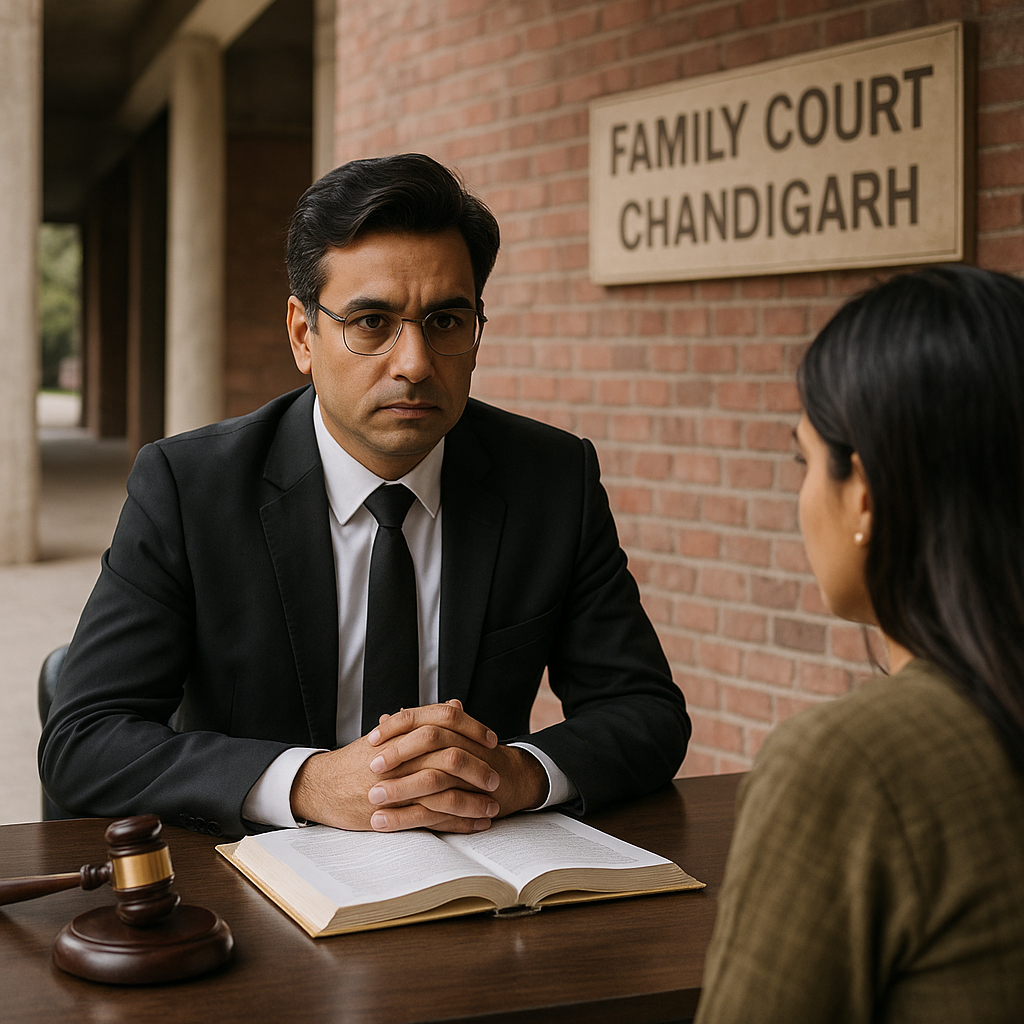
Chandigarh’s Divorce Law: What Clients Wish They Knew Before Choosing an Advocate
Why Choosing the Right Divorce Lawyer in Chandigarh Feels Overwhelming
Sukhdeep sat outside the family court Chandigarh, clutching a thick file of papers. Her phone buzzed with another missed call from her mother. She had spent weeks searching for a divorce lawyer in Chandigarh but still felt lost. Was her lawyer actually fighting for her? Was she getting honest legal advice – or just running in circles?
Divorce in Chandigarh is rarely just about paperwork. It can feel like a maze: old family tensions, Punjab law quirks, and the pressure of making the right decisions. Many clients, especially first-timers, walk in blind. They trust the wrong advocates or expect the process to be quick and simple. Often, they end up frustrated, drained, and confused about what just happened in that packed courtroom.
If you’re about to start divorce proceedings, you probably have the same questions: How do I pick the right advocate? What will actually happen in court? How long will this drag on? And most importantly – what do people wish they knew before they started?
Let’s break it down, step by step, with real details and local context. Because honestly, the right divorce lawyer in Chandigarh isn’t just about flashy ads or big promises.
Quick Answer:
Most clients wish they understood how much the success of their divorce case in Chandigarh depends on choosing an advocate with real local expertise, clear communication, and experience in both Punjab law and family court Chandigarh procedures. Rushing the selection, ignoring compatibility, or skipping background checks can make the process longer, more expensive, and emotionally harder.
Understanding Divorce Law in Chandigarh: What Makes It Unique?
Divorce law in Chandigarh runs on a mix of national rules and specific local practices. Punjab law, the Chandigarh administration, and the quirks of family court Chandigarh all shape how cases move and what clients can expect.
The Legal Framework: National Laws and Local Rules
- Hindu Marriage Act, 1955: Most divorces in Chandigarh use this Act, especially among Hindus, Sikhs, Jains, and Buddhists.
- Special Marriage Act, 1954: For interfaith couples or those not covered by religion-based laws.
- Indian Divorce Act, 1869: Applies mainly to Christians.
- Muslim Personal Law: Follows Sharia rules and local customs.
But here’s the catch – local practice matters as much as the written law. Some judges in family court Chandigarh are stricter about evidence. Others push for mediation first. Even the paperwork order can change from what you read online.
Family Court Chandigarh: How It Actually Works
Family court Chandigarh is housed in the Sector 43 complex. The courtrooms are busy, often packed, and cases move quickly. You’ll see:
- Multiple hearings: Don’t expect a single day solution. Even mutual consent divorce takes at least six months.
- Mediation sessions: Most judges push couples to try mediation before hearing arguments.
- Clerical checks: If your documents aren’t perfect, the court staff will send you back to fix them – no matter how far you’ve come.
Local Challenges and Realities
- Backlog of cases: Expect delays. Some contested divorces can stretch for years.
- Language mix: Proceedings switch between English, Hindi, and Punjabi. Make sure you and your lawyer are comfortable with this.
- Social pressure: Chandigarh society is still conservative about separation, especially for women. This can affect everything from police help to property division.
Key Point: Don’t just read the law. Ask your advocate about real court practice in Chandigarh. The difference is huge.
The Divorce Process in Chandigarh: Step-by-Step Walkthrough
Getting a divorce here isn’t just about filing a petition. It’s a multi-step process shaped by Punjab law and the local family court.
1. Deciding on the Type of Divorce
- Mutual Consent: Both partners agree to separate and settle issues like custody and property. Fastest path – minimum six months.
- Contested Divorce: One partner wants to separate, the other does not. Takes longer, with more hearings and evidence.
2. Initial Legal Advice and Document Preparation
Your divorce lawyer in Chandigarh should:
- Explain your rights under Punjab law
- List all documents needed (marriage certificate, proof of residence, bank statements, etc.)
- Check for missing or incorrect paperwork before filing
3. Filing the Petition in Family Court Chandigarh
- File in Sector 43 court, with all supporting documents
- Petition is “admitted” and notice is sent to the other party
4. Mediation and Counseling
- The court usually refers both parties to a counselor or mediation cell
- Aim is to attempt reconciliation or at least narrow down disputes
- If mediation fails, the case returns to the judge
5. Hearings and Evidence
- Both sides present their case through affidavits and witnesses
- Cross-examination can be intense and time-consuming
- The judge may order interim relief (maintenance, custody, etc.)
6. Final Arguments and Judgment
- Both lawyers make closing submissions
- Judge gives a final order – may include alimony, custody, property division
7. Appeal (if needed)
- If unhappy, you can appeal to the Punjab and Haryana High Court
- Appeals can take months or even years
Tip: Keep every document, notice, and order safely. Family court Chandigarh is strict about paperwork.
How to Choose a Divorce Lawyer in Chandigarh: What Clients Regret Missing
Most people think any lawyer can handle a divorce. But after a few court dates, reality hits. The right advocate selection can change everything – from speed to outcome to emotional stress.
What to Look for in a Divorce Lawyer
- Local court experience: Has the lawyer handled many cases in family court Chandigarh? Local familiarity beats big city credentials here.
- Communication skills: Will the lawyer explain things in plain language, or hide behind legal jargon?
- Track record: Does the advocate have real wins in similar cases? Ask for examples, not just promises.
- Transparency about fees: Fixed fee, hourly rate, or hidden extras? Get this in writing.
- Personal fit: Do you feel comfortable sharing personal details? If not, pick someone else.
Red Flags Most Clients Miss
- Over-promising results: If someone guarantees victory, be skeptical.
- Pushing for unnecessary litigation: Some lawyers drag cases to increase fees.
- Too busy to respond: If your calls go unanswered for days, that’s a warning sign.
- No written agreement: Always insist on a written engagement letter.
Questions to Ask Before Hiring
- How many divorce proceedings have you handled in Chandigarh?
- What is your strategy for my situation?
- Can you explain the local divorce process step by step?
- What are the likely costs and timelines?
- Who will actually appear in court – will it always be you?
Personal Experience: Jaspreet, a client from Sector 21, said, “My first lawyer kept sending juniors to court. I didn’t even know who was arguing my case until the final hearing.”
Common Mistakes Clients Make During Divorce Proceedings
Even the smartest people get tripped up by the local divorce process. Here are the mistakes that keep coming up in client experience stories.
Mistake 1: Not Understanding the Grounds for Divorce
Punjab law is strict about what counts as a valid ground. Adultery, cruelty, desertion, conversion, unsound mind, and irretrievable breakdown are the main ones. Just being unhappy isn’t enough. Your divorce lawyer in Chandigarh must help you frame your case under a proper legal ground.
Mistake 2: Poor Documentation
- Missing marriage certificate
- No proof of address in Chandigarh
- Incomplete financial details
- WhatsApp chats/screenshots not properly certified
Without proper documents, family court Chandigarh will delay or dismiss your case. I’d skip the “I’ll bring it later” attitude.
Mistake 3: Ignoring Mediation
Many clients see mediation as a waste of time. But judges often take a dim view if you skip or disrespect the process. Sometimes, a good mediator can even help settle property or custody issues faster than a judge.
Mistake 4: Emotional Outbursts in Court
Family court is not the place for drama. Judges in Chandigarh are strict about courtroom conduct. Emotional scenes can actually hurt your case, especially in custody disputes.
Mistake 5: Trusting Verbal Agreements
Always get settlements in writing, stamped by the court. Verbal promises fall apart the moment tempers flare.
Local Divorce Process: What’s Different in Chandigarh?
You may have read about divorce in Delhi or Mumbai, but Chandigarh has its own quirks. Understanding these local differences can save you time and money.
Family Court Chandigarh: Timings, Delays, and Procedures
- Court hours: 10 am to 4 pm, with a one-hour lunch break. Most cases are heard before noon.
- Long waiting lists: Some courts list over 40 cases a day. Your hearing may get pushed to the afternoon or another day.
- Clerical checks: Clerks are strict about format. Even a missing staple can delay your file.
Mediation Cells: The Inside Story
Chandigarh’s court-annexed mediation center is in the same Sector 43 building.
– Sessions are usually 30 – 60 minutes.
– Mediators are mostly retired judges or senior lawyers.
– If you refuse mediation without good reason, the judge may see you as uncooperative.
Police and Social Support
- Police help is available for domestic violence or threats, but expect delays.
- Social workers may get involved in custody cases, especially if children are below 10 years.
Key Insight: Chandigarh’s court staff and judges value punctuality, paperwork, and patience. Shortcuts rarely work.
Legal Advice: What to Expect (And What Not to)
Clients often expect their divorce lawyer to handle everything, but that’s rarely the case. Here’s what real legal advice looks like in Chandigarh.
What Good Legal Advice Covers
- Full explanation of your rights under Punjab law and national statutes
- Step-by-step timeline for your type of divorce
- Assessment of risks and possible outcomes
- Options for settlement (property, maintenance, custody)
- Guidance on court behavior and documentation
What Legal Advice Can’t Guarantee
- Exact timelines: Court delays are common
- Specific outcomes: Judges have wide discretion
- Emotional closure: That’s outside any advocate’s control
- Zero conflict: Even mutual consent divorces can hit rough patches
Getting a Second Opinion
It’s common to consult two or three advocates before deciding. Don’t feel guilty. Just be clear if you’re switching lawyers – duplicate petitions can cause confusion in family court Chandigarh.
Pro Tip: Keep a diary of every meeting, advice given, and step taken. It’s easy to forget who said what after months of proceedings.
Punjab Law vs. Other States: Key Differences in Divorce Proceedings
If you’ve heard stories from friends in Delhi or Mumbai, be careful. Punjab law and Chandigarh court practice have a few unique twists.
Major Differences
| Aspect | Punjab/Chandigarh | Delhi/Mumbai |
|---|---|---|
| Minimum separation for mutual consent | 1 year (strictly enforced) | Sometimes flexible |
| Mediation | Compulsory in almost all cases | Often optional |
| Paperwork scrutiny | Very strict (format, attachments) | Sometimes more relaxed |
| Language used | Punjabi, Hindi, English | Hindi, English |
| Attitude towards interim relief | Fast for genuine need, but tough scrutiny | More lenient |
Special Issues in Chandigarh
- Property rights for women are sometimes harder to enforce due to local customs.
- Judges may ask for additional family background information.
- Social stigma is still stronger than in metros.
Honest View: Don’t rely on advice from relatives outside Punjab. The ground realities are different here.
Client Experience: Real Stories From Chandigarh’s Family Court
Hearing from others who’ve walked this path can help. Here are three real scenarios:
Case 1: Mutual Consent Divorce Gone Smooth
A couple from Sector 15 agreed on everything – no kids, no property fight. Their divorce lawyer in Chandigarh filed the petition, attended mediation, and got the decree after two quick hearings. Total time: 7 months.
Case 2: Contested Divorce With Custody Battle
A woman from Mohali filed for divorce on grounds of cruelty. Her husband dragged out the case, refusing to attend mediation. The court ordered interim maintenance and gave temporary custody to the wife. Final judgment took two years but favored the wife after multiple witness statements.
Case 3: Property Dispute Delaying Divorce
A businessman from Panchkula tried to hide assets. His wife’s advocate used bank statements and land records to prove ownership. The case stretched for 3 years, with the judge finally ordering an equal split.
Pattern: The more issues you fight over, the longer and costlier it gets.
Advocate Selection: Checklist for Chandigarh Clients
Choosing a divorce lawyer in Chandigarh is not like picking a doctor or accountant. The stakes are personal and emotional. Here’s a practical checklist.
Advocate Selection Checklist
- Does the lawyer have at least 5 years’ experience in family court Chandigarh?
- Can they explain the divorce process in simple terms?
- Do they have a transparent fee structure?
- Are they available for regular updates?
- Can they handle both mediation and litigation?
- Will they let you speak to past clients (if privacy allows)?
- Are they comfortable with English, Hindi, and Punjabi?
- Have they handled cases similar to yours (mutual, contested, property, custody)?
How to Compare Advocates
| Criteria | Lawyer A | Lawyer B | Lawyer C |
|---|---|---|---|
| Local experience | Yes | No | Yes |
| Fee transparency | Yes | No | Yes |
| Communication | Good | Average | Good |
| Past results | Strong | Unknown | Average |
| Languages spoken | 3 | 2 | 3 |
Don’t rush. Meet at least two or three advocates before deciding.
Frequently Asked Questions
1. What is the process for getting a divorce in Chandigarh?
Divorce in Chandigarh involves filing a petition in family court, attending mediation, presenting evidence, and waiting for the judge’s final order. Mutual consent divorces take at least six months, while contested cases can take years.
2. How do I choose the best divorce lawyer in Chandigarh?
Look for local experience, clear communication, transparent fees, and a good track record in family court Chandigarh. Meet multiple advocates before deciding.
3. What documents are required for divorce proceedings in Chandigarh?
You’ll need your marriage certificate, proof of address, identity documents, financial statements, and evidence supporting your grounds for divorce. Bring originals and photocopies.
4. How long does a mutual consent divorce take in Chandigarh?
A mutual consent divorce takes a minimum of six months from the first motion to the final decree, as per Punjab law. Delays may occur if paperwork is incomplete.
5. What are the grounds for divorce under Punjab law?
Common grounds include adultery, cruelty, desertion, conversion, unsound mind, and irretrievable breakdown of marriage. Your lawyer will guide you on the best ground for your case.
6. Can I change my divorce lawyer during the case?
Yes, you can switch advocates at any stage. Inform the court and file a ‘vakalatnama’ for the new lawyer to officially take over.
7. What is the cost of hiring a divorce lawyer in Chandigarh?
Fees vary by complexity and experience. Mutual consent cases may start from ₹25,000 – ₹50,000, while contested divorces can cost ₹1 lakh or more.
8. Can I get interim maintenance or custody during the divorce?
Yes, family court Chandigarh can grant interim maintenance and child custody orders while the case is pending.
9. Is mediation compulsory in Chandigarh divorce cases?
Yes, most divorce proceedings in Chandigarh require at least one mediation session before the main trial starts.
10. Can I file for divorce if my spouse lives outside Chandigarh?
Yes, you can file in Chandigarh if your marriage took place here, you last lived together here, or you currently reside here.
11. What happens if one spouse refuses to attend mediation?
The case continues, but the judge may view the refusing spouse as uncooperative. This can affect interim orders and the final outcome.
12. How is property divided in a Chandigarh divorce?
Property is usually divided based on ownership, contribution, and negotiation. The court can order an equal split if justified.
13. Can I get a divorce without appearing in court?
Personal appearance is required at least once, especially for mutual consent divorces. Some steps can be handled by your advocate.
14. What are common mistakes to avoid in Chandigarh divorce cases?
Avoid poor documentation, ignoring mediation, trusting verbal agreements, and choosing a lawyer without local experience.
15. How can I speed up my divorce case in Chandigarh?
Prepare all documents in advance, cooperate in mediation, avoid unnecessary disputes, and choose a proactive divorce lawyer in Chandigarh.
Key Takeaways
- The right divorce lawyer in Chandigarh can save you time, money, and stress.
- Local court experience matters more than big-name credentials.
- Family court Chandigarh is strict about paperwork and punctuality.
- Mediation is compulsory and can actually help settle disputes faster.
- Punjab law sets specific grounds for divorce – choose the right one.
- Poor documentation is the most common reason for delays.
- Social stigma still affects divorce, especially for women.
- Always get settlements in writing, certified by the court.
- Fees and timelines vary widely – get details in advance.
- Switching lawyers mid-case is possible but needs clear paperwork.
- Court delays are common, especially in contested cases.
- Prepare to attend at least one court hearing in person.
- Interim maintenance and custody can be ordered during proceedings.
- Always ask for a written agreement with your advocate.
- Never trust verbal promises from the other side.
Conclusion
Divorce in Chandigarh is rarely as simple as it looks on paper. The right advocate selection, understanding of Punjab law, and careful preparation can make the difference between a quick, fair outcome and months of stress. Most clients regret not doing their homework – on lawyers, on documents, and on local court quirks.
If you’re searching for a divorce lawyer in Chandigarh, take your time, ask tough questions, and get everything in writing. The process won’t be easy, but with the right support, you can get through it with your dignity (and sanity) intact.
