
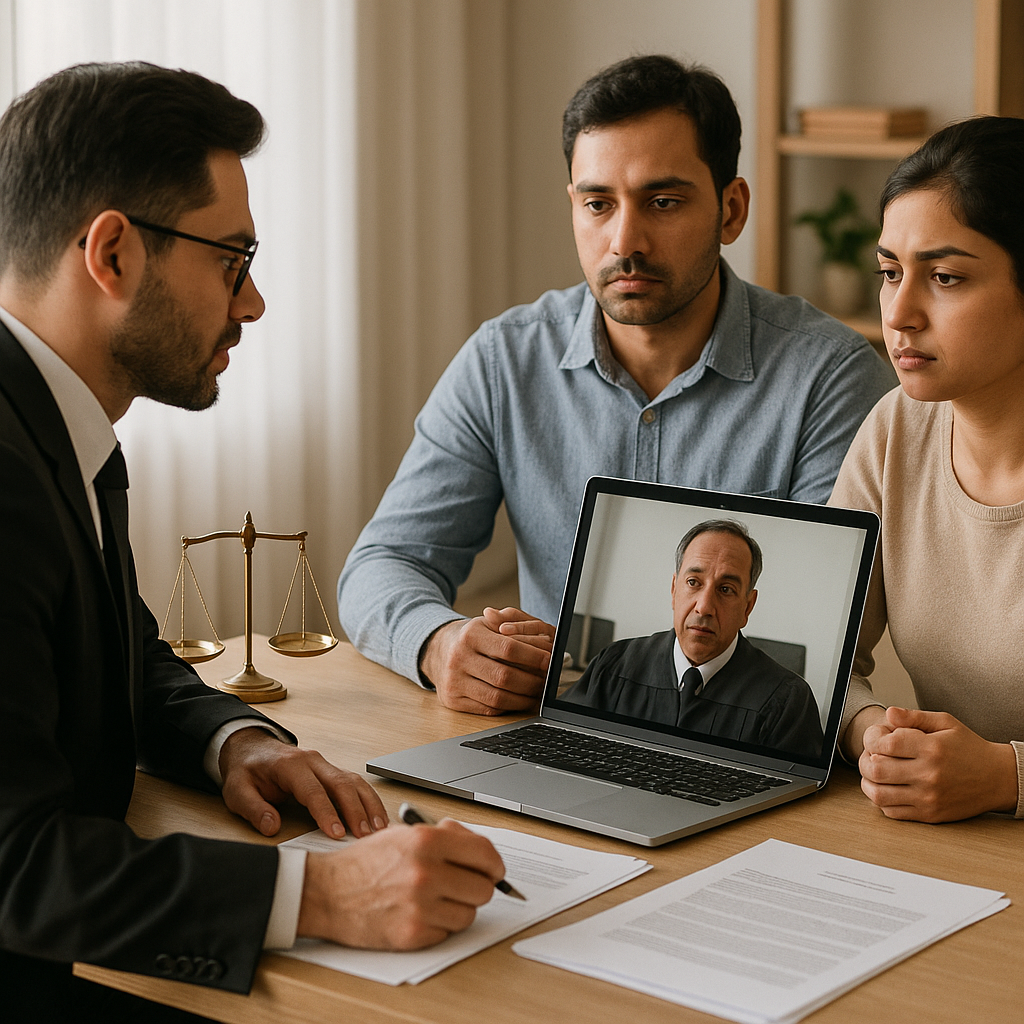
Mutual Divorce Without Physical Presence: Legal Options for NRI Couples
Introduction
Last year, I got a call from an old school friend living in Canada. Both she and her husband – married in India, now settled abroad – wanted to file for divorce. But neither could take time off to fly back. She asked me, “Is it even possible for NRI couples to get a mutual divorce in India without coming in person?” Honestly, her question reflects what hundreds of Non-Resident Indians (NRIs) face every year: How do you end a marriage legally in India when you live in another country, and travel is expensive or just not possible?
Mutual divorce NRI couples often hit a wall of legal confusion. Indian divorce laws are built for people living here, showing up in court, and signing papers. But life isn’t that neat for everyone. Airline tickets, visa issues, jobs, and kids’ school schedules make flying home for court dates a nightmare. Yet, more and more courts now allow remote participation, video conferencing, and even online document submission. The process is still evolving, but there are genuine legal ways to get a mutual divorce in India without physically appearing in court.
If you’re an NRI couple stuck in a broken marriage and looking for a way out, this article lays out every option, pitfall, and practical step. We’ll cover legal requirements, how remote divorce filing works, what documents you need, and the real risks few lawyers mention. Whether you’re in Dubai, London, or Toronto, the right approach can save you months of stress and thousands of rupees.
Quick Answer
Yes, NRI couples can file for mutual divorce in India without physical presence by using a Power of Attorney, remote document submission, and, in many cases, video conferencing court hearings. The exact process depends on the court’s policies, your marriage act, and proper legal documentation. Always consult a Mutual Divorce Lawyer familiar with remote divorce filing for NRIs.
Understanding Mutual Divorce for NRI Couples
Mutual divorce for NRI couples means both spouses agree to end the marriage and settle issues like alimony, child custody, and property – without fighting in court. In India, this is called Mutual Consent Divorce. For NRIs, the challenge is handling this process from abroad.
What is Mutual Consent Divorce?
Mutual Consent Divorce is a process under Section 13B of the Hindu Marriage Act, 1955, and Section 28 of the Special Marriage Act, 1954. Both parties must agree that the marriage has irretrievably broken down, and submit a joint petition.
- No need to prove fault: Unlike contested divorce, you don’t have to prove cruelty, desertion, or adultery.
- Mandatory cooling-off period: Indian law requires a minimum of six months between the first and second motions, though the Supreme Court allows waivers in certain cases.
- Settlement Agreement: Both parties must decide on maintenance, child custody, and division of assets before filing.
Why is it Different for NRI Couples?
Most Indian courts expect both spouses to appear in person for both motions. But for NRIs, flying in twice (sometimes more) is a major hassle. That’s where remote divorce filing and Power of Attorney come into play.
- Time zone issues: Coordinating with Indian courts from abroad can mean late nights or early mornings.
- Notary and apostille: Documents signed abroad need to be notarised and sometimes apostilled for Indian courts to accept them.
- Jurisdiction: The petition must be filed where the marriage took place, where the couple last resided together, or where one spouse currently lives in India.
Key Legal Terms Explained
- Power of Attorney (PoA): Legal document authorising someone in India to act on your behalf.
- Apostille: International certificate confirming the authenticity of a document, required for Indian courts if signed outside India.
- Video Conferencing Court: Many courts now allow hearings via platforms like Cisco Webex or Zoom, especially post-pandemic.
Legal Framework for Remote Mutual Divorce in India
Remote mutual divorce has become more common, but the law still expects certain procedures. Here’s how it works step by step, and which legal options are available for NRI couples.
Filing Process: Step-by-Step
- Hire a Mutual Divorce Lawyer in India: Find someone with experience in NRI divorce cases.
- Draft the Mutual Consent Petition: The lawyer prepares a joint petition detailing the grounds for divorce, settlement terms, and other agreements.
- Sign and Notarise Documents Abroad: Each spouse signs the petition and settlement agreement. These must be notarised locally and, in most countries, apostilled.
- Send Documents to India: Courier the original documents to your lawyer or Power of Attorney holder in India.
- File the Petition in Court: The lawyer or PoA files the documents in the appropriate family court.
- First Motion Hearing: Traditionally, both parties appear in person. Now, many courts allow one or both spouses to join via video conferencing or through their PoA holder.
- Cooling-Off Period: Wait for six months (can be waived in some cases).
- Second Motion Hearing: Again, physical appearance is ideal, but video conferencing or PoA representation is often accepted.
- Final Decree: The court grants the divorce decree if satisfied.
Power of Attorney: The NRI Lifeline
For NRI couples, a properly executed Power of Attorney is essential. It lets a trusted person in India sign documents and even appear in court for you.
- Draft carefully: Specify the powers (signing, appearing in court, withdrawing petition, etc).
- Notarise and apostille: Must be notarised in your country and apostilled if required.
- Submit original PoA to the Indian court.
Remote Court Hearings
Since COVID-19, many courts have accepted remote hearings. Each court has its own rules – some insist on in-person appearance for both motions, others allow full video participation.
- Platforms used: Cisco Webex, Zoom, Jitsi Meet, or court’s own system.
- Advance request: Your lawyer must request remote appearance during filing.
- Technical issues: Strong internet and proper identification are a must. Courts may ask for video ID verification.
Documents Required for Mutual Divorce NRI Couples
You’ll need:
- Mutual Divorce Petition
- Settlement Agreement (maintenance, custody, property)
- Marriage Certificate
- ID Proofs (passports, Aadhaar if available)
- Address Proofs (utility bills, bank statements)
- Power of Attorney (if not appearing in person)
- Affidavits (as per court’s format)
- Recent photographs
Always check with your lawyer for court-specific requirements. Documents signed abroad usually need both notarisation and apostille for Indian courts.
How Remote Divorce Filing Works for NRI Couples
Remote divorce filing for NRI couples means handling every part of the mutual divorce process from outside India. With careful planning, it’s possible to get a legal divorce decree without setting foot in an Indian court.
Setting Up Power of Attorney
A Power of Attorney (PoA) lets you appoint someone in India to handle legal steps on your behalf. This is the backbone of remote mutual divorce for NRI couples.
- Choose wisely: Pick a close family member or friend you trust.
- Specific powers: The PoA should clearly mention authority to sign, submit, and withdraw the petition, and appear in court if needed.
- Notarisation and apostille: Sign the PoA in front of a notary (and Indian consulate if required), then get it apostilled under the Hague Convention.
Filing the Petition Remotely
Once your lawyer has all the signed and apostilled documents, they file the joint petition in the relevant family court. The court will issue a date for the first motion hearing.
- Some courts require at least one spouse to appear physically for the first motion. Others accept both spouses joining by video or being represented by PoA holders. Always check local court rules.
- If both spouses are outside India, courts often ask for video conferencing at the Indian embassy or consulate.
Participating in Video Conferencing Court Hearings
Joining an Indian court hearing via Zoom or Webex sounds simple, but there are practical hurdles:
- Advance notice: Your lawyer must request video conferencing in writing, explaining why you can’t travel.
- Court approval: The judge decides if remote appearance is allowed.
- ID verification: Keep your passport handy for video calls; the court may record the session.
- Time zone coordination: Indian courts usually schedule hearings in the afternoon to accommodate NRIs in Europe or North America.
Risks and Limitations
Remote mutual divorce for NRI couples isn’t always straightforward.
- Technical failures: If your internet drops, the hearing may be postponed.
- Judicial discretion: Some courts or judges may insist on physical presence, especially for the second motion.
- Fraud risk: Courts are careful to ensure both parties are voluntarily consenting. Any hint of coercion or fraud can delay or derail the process.
Real-World Example
A couple living in Melbourne filed for mutual divorce in Mumbai. The husband’s brother in India became his PoA. The wife joined all hearings by Zoom from Australia, after submitting notarised and apostilled documents. The court granted the divorce in eight months, with both parties never meeting in person.
Choosing the Right Mutual Divorce Lawyer for NRI Divorce
Finding a lawyer who actually understands the quirks of NRI divorce is half the battle. Not every Mutual Divorce Lawyer can handle remote divorce filing for NRI couples.
What to Look For
- Experience with NRI divorce: Check the lawyer’s track record with remote filings and Power of Attorney cases.
- Clear communication: Your lawyer should explain Indian legal terms, court timelines, and documents in plain English.
- Tech-savvy: They should be comfortable with online meetings, scanning and uploading documents, and court’s digital systems.
- Local court knowledge: Laws may be national, but procedures vary by court and judge. A Delhi court may accept video conferencing, while a small town court might not.
Interviewing Lawyers: Key Questions
- Have you handled remote mutual divorce for NRI couples before?
- How do you coordinate with clients across time zones?
- What are the court’s rules for remote hearings in my jurisdiction?
- How long will the process take, realistically?
- What documents will I need to notarise and apostille?
Typical Fees and Payment Methods
- Fee structure: Most lawyers charge a flat fee for mutual divorce, ranging from ₹50,000 to ₹2,00,000 depending on complexity and city.
- Overseas payment: Be clear about bank transfers, currency conversion, and taxes. Some lawyers accept PayPal or direct wire transfers.
Mistakes to Avoid
- Picking a lawyer only on price: Cheap can get expensive if it leads to delays or rejected documents.
- Ignoring reviews: Ask for client testimonials – especially from other NRIs.
- Not clarifying remote process beforehand: Some lawyers promise remote filing but later insist on physical presence.
Documents and Evidence Needed for Mutual Divorce NRI Couples
Getting your documents in order is the most time-consuming part of the process. Missing paperwork is the number one reason mutual divorce cases get delayed for NRI couples.
Essential Mutual Divorce Documents
- Marriage Certificate: Original plus copies. If lost, apply for a duplicate from the issuing authority in India.
- Joint Mutual Consent Petition: Drafted by your lawyer, signed by both parties.
- Settlement Agreement: Details about alimony, child custody, and property split.
- ID Proofs: Passports, OCI/PIO cards, and local country ID.
- Address Proofs: Utility bills, rental agreements, or bank statements from both countries.
- Power of Attorney: If you’re not appearing in person.
- Affidavit of Non-Residency: Confirms your NRI status and current address abroad.
- Recent Passport Photos: Usually 2 – 4 each.
Notarisation and Apostille Explained
- Notarisation: Certifies that you signed the document in front of a notary public in your country.
- Apostille: For countries part of the Hague Convention, this is a sticker or stamp from the local authorities confirming the notary’s seal is genuine. Indian courts demand this for foreign-signed documents.
Tips for Document Preparation
- Double-check spellings: Names on passports, marriage certificates, and petitions must match exactly.
- Scan and email before couriering: Let your lawyer review soft copies to avoid mistakes before sending originals.
- Keep extra copies: Indian courts are notorious for misplacing files. Always have backups.
Handling Missing or Damaged Documents
If your marriage certificate is missing, apply for a duplicate at the municipal office where the marriage was registered. For any document damaged or illegible, get a certified copy from the issuing authority abroad or in India.
Common Mistakes NRI Couples Make During Mutual Divorce
It’s easy to trip up when dealing with Indian courts from another country. Here are the most common mistakes and how to avoid them.
- Not planning for the cooling-off period: Many NRIs forget about the six-month gap between motions. If you need a waiver, your lawyer must apply early and show valid reasons.
- Sending incomplete documents: If any document is missing, the court will adjourn your case for months.
- Improper Power of Attorney: Vague or badly drafted PoAs are often rejected. Use a lawyer’s template, not a generic online form.
- Ignoring local court rules: Each judge has their own preferences. Some insist on live video testimony; others accept PoA holders. Always check.
- Assuming all courts accept remote hearings: Not true. Check before you start, or you may waste time and money.
- Not considering tax and property implications: Divorce can affect NRI tax status and property rights. Get financial advice before finalising the settlement.
- Choosing a lawyer unfamiliar with NRI divorce: This leads to delays, rejected filings, and unnecessary stress.
Best Practices for a Smooth Remote Mutual Divorce
A little planning goes a long way. If you want your mutual divorce to go smoothly from abroad, follow these best practices.
Choose the Right Court
- Jurisdiction: You can file where the marriage took place, where you last lived together in India, or where either spouse lives now.
- Faster cities: Mumbai, Delhi, and Bangalore courts are more familiar with NRI divorce and remote hearings.
Prepare Thoroughly
- Confirm all documents: Double-check with your lawyer what’s needed for your specific case.
- Get PoA right: Use precise language and get it apostilled.
- Arrange for reliable courier: Use DHL, FedEx, or similar for sending originals to India.
Stay in Touch
- Regular updates: Schedule calls with your lawyer after each hearing.
- Monitor court dates: Indian courts often reschedule without much notice. Stay informed.
- Check for decree dispatch: After the final order, ask your lawyer to send the certified divorce decree to you abroad.
Consider Child Custody and Support
- Write clear terms: If kids are involved, spell out custody, visitation, and support in the settlement agreement.
- International enforceability: Make sure the agreement can be enforced in your country of residence if needed.
Waiver of Cooling-Off Period
- Possible but not guaranteed: The Supreme Court allows waivers for NRIs who can prove hardship. Your lawyer must file a detailed application showing why waiting six months is unreasonable.
Trends and Future Outlook for NRI Mutual Divorce in India
Indian courts are slowly catching up with global realities. More judges now accept remote filings and video conferencing, especially for NRI divorce cases. But the process is still uneven, with some courts more tech-friendly than others.
Growing Acceptance of Remote Hearings
- COVID-19 impact: The pandemic forced courts to adopt video technology. Many have kept these systems in place, at least for procedural hearings.
- Online document submission: Some courts now accept scanned petitions and affidavits by email, followed by originals by post.
Legal Reforms on the Horizon
- Proposals for NRI Divorce Portals: The Ministry of External Affairs has discussed creating an online portal for NRI divorce, but nothing concrete yet.
- Push for uniform rules: Legal experts call for standardised procedures for remote mutual divorce, but implementation is slow.
International Recognition of Indian Divorces
- Foreign courts: Most Western countries recognise mutual divorce decrees from Indian courts if due process is followed.
- Double proceedings: In rare cases, you may need to register the Indian decree in your country for full legal effect.
Practical Tips for the Future
- Ask your lawyer about new rules or pilot programs in your jurisdiction.
- Stay updated on court circulars – many are experimenting with WhatsApp notifications for NRI litigants.
Frequently Asked Questions
What is mutual divorce for NRI couples in India?
Mutual divorce for NRI couples in India is when both spouses, living outside India, agree to end their marriage and jointly file for divorce in an Indian court. The process is based on mutual consent and can often be managed remotely through Power of Attorney and video conferencing.
Can NRI couples get mutual divorce without coming to India?
Yes, NRI couples can file for mutual divorce in India without physical presence by appointing a Power of Attorney and participating in court hearings via video conferencing. However, acceptance depends on the specific court’s policies and the judge.
What documents are required for mutual divorce for NRI couples?
Key documents include the marriage certificate, mutual consent petition, settlement agreement, ID and address proofs, Power of Attorney, notarised and apostilled affidavits, and recent photographs. All documents signed abroad must be notarised and apostilled as per Indian court requirements.
How do I get a Power of Attorney for mutual divorce in India as an NRI?
Prepare a detailed Power of Attorney document, sign it before a notary in your country, get it apostilled (if required), and courier the original to India. Your lawyer will submit it to the court along with your divorce petition.
Is video conferencing allowed for mutual divorce hearings in India?
Many Indian family courts allow NRI spouses to join hearings via video conferencing, especially after COVID-19. Approval depends on the judge and local court rules. Advance requests and proper identification are mandatory.
What is the cooling-off period in mutual divorce, and can NRIs get it waived?
The cooling-off period is a mandatory six months between the first and second motions in mutual divorce. NRIs can request a waiver by showing hardship, but the court’s decision varies by case.
Which courts in India are best for NRI mutual divorce cases?
Courts in major cities like Delhi, Mumbai, and Bangalore are more accustomed to NRI divorce cases and remote hearings. Smaller town courts may be less flexible.
How long does mutual divorce take for NRI couples?
The process usually takes 8 – 12 months, including the cooling-off period. With a waiver, it can be completed in 3 – 4 months if all documents are in order and the court allows remote participation.
What if my spouse does not cooperate in mutual divorce?
Mutual divorce requires consent from both parties. If your spouse is unwilling, you must file for contested divorce, which is more complex and time-consuming.
Can I use an overseas lawyer for mutual divorce in India?
You must hire an Indian lawyer authorised to practice in the relevant Indian court. Overseas lawyers can assist with documentation but cannot represent you in Indian courts.
How do Indian mutual divorce decrees get recognised abroad?
Most countries recognise Indian divorce decrees if due process is followed. Sometimes, you need to register the Indian court’s order with local authorities for full legal effect.
What are the fees for mutual divorce for NRI couples?
Legal fees range from ₹50,000 to ₹2,00,000, depending on the lawyer, city, and complexity. Additional costs include notary, apostille, and courier charges.
Is mutual divorce possible under all marriage acts in India?
Mutual divorce is available under the Hindu Marriage Act, Special Marriage Act, and other personal laws. The process and required documents may vary slightly.
How do I ensure my mutual divorce settlement is enforceable abroad?
Draft the settlement agreement in clear, legally binding terms. Consult a local lawyer in your country to check if the Indian order will be recognised and enforceable there.
What if my marriage certificate is lost or damaged?
Apply for a duplicate marriage certificate from the municipal office where your marriage was registered in India. This is required for court filings.
Key Takeaways
- Mutual divorce NRI couples can complete the process in India without visiting in person by using Power of Attorney and video conferencing.
- Always notarise and apostille documents signed abroad for Indian courts.
- Choose a Mutual Divorce Lawyer experienced with NRI and remote divorce filings.
- The cooling-off period can sometimes be waived for NRIs facing hardship.
- Courts in major Indian cities are more likely to accept remote hearings.
- Missing or incorrect documents are the top cause of delays in NRI mutual divorce cases.
- Child custody and financial settlements should be clearly detailed in your agreement.
- Keep scanned copies of all documents and send originals by secure courier.
- Each Indian court has different rules – double-check remote appearance policies before starting.
- Indian mutual divorce decrees are usually recognised abroad, but check local requirements for registration.
Conclusion
Mutual divorce for NRI couples is no longer a distant dream or an endless hassle. With careful planning, the right Power of Attorney, and a lawyer who understands remote divorce filing, you can complete the entire process from abroad. Courts are slowly adapting to the realities of global families, but rules still vary widely by city and even by judge.
If you’re an NRI couple considering mutual divorce in India, start by gathering your documents, finding an experienced lawyer, and clarifying the court’s remote hearing rules. The process is manageable – and a little preparation now can save you months of delay and frustration. Mutual divorce NRI couples have real, workable options today, even if you’re thousands of miles away from home.
